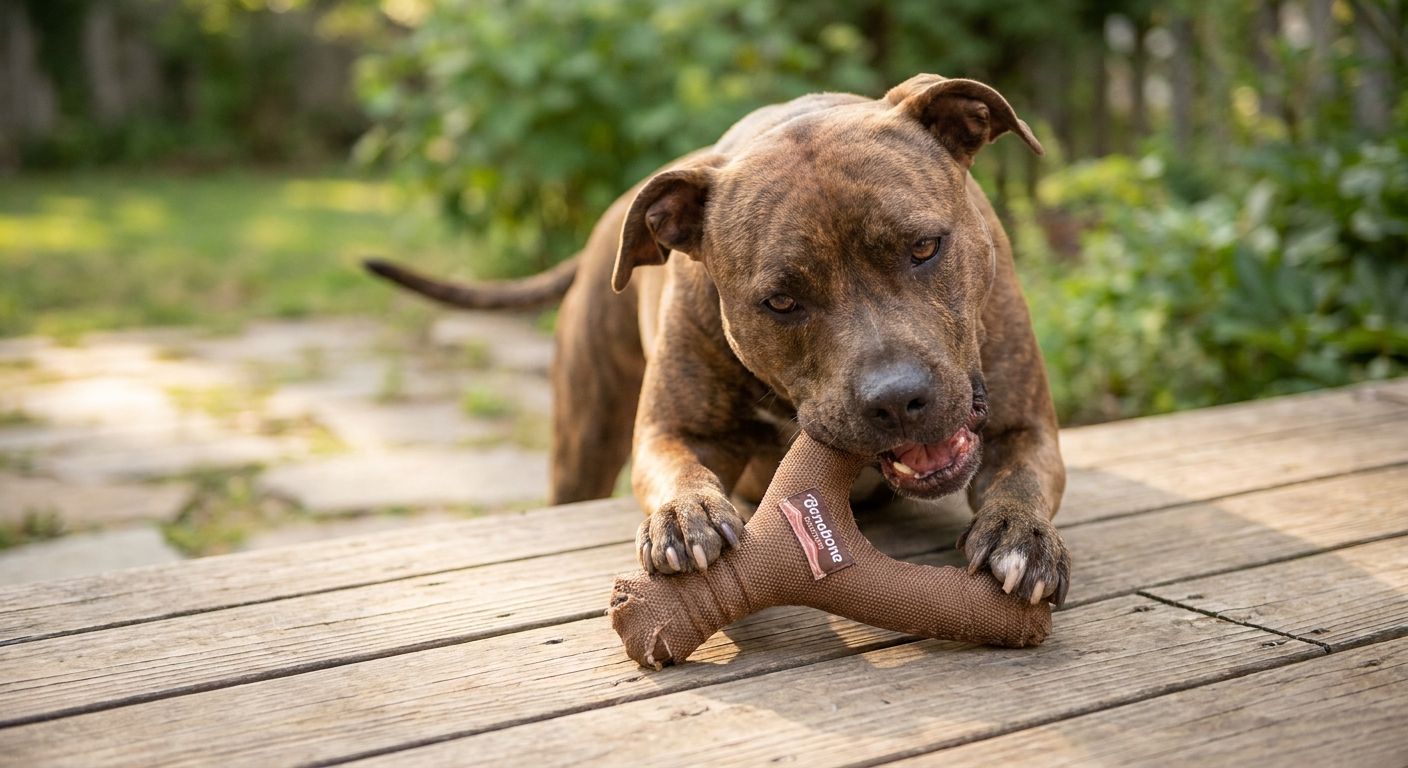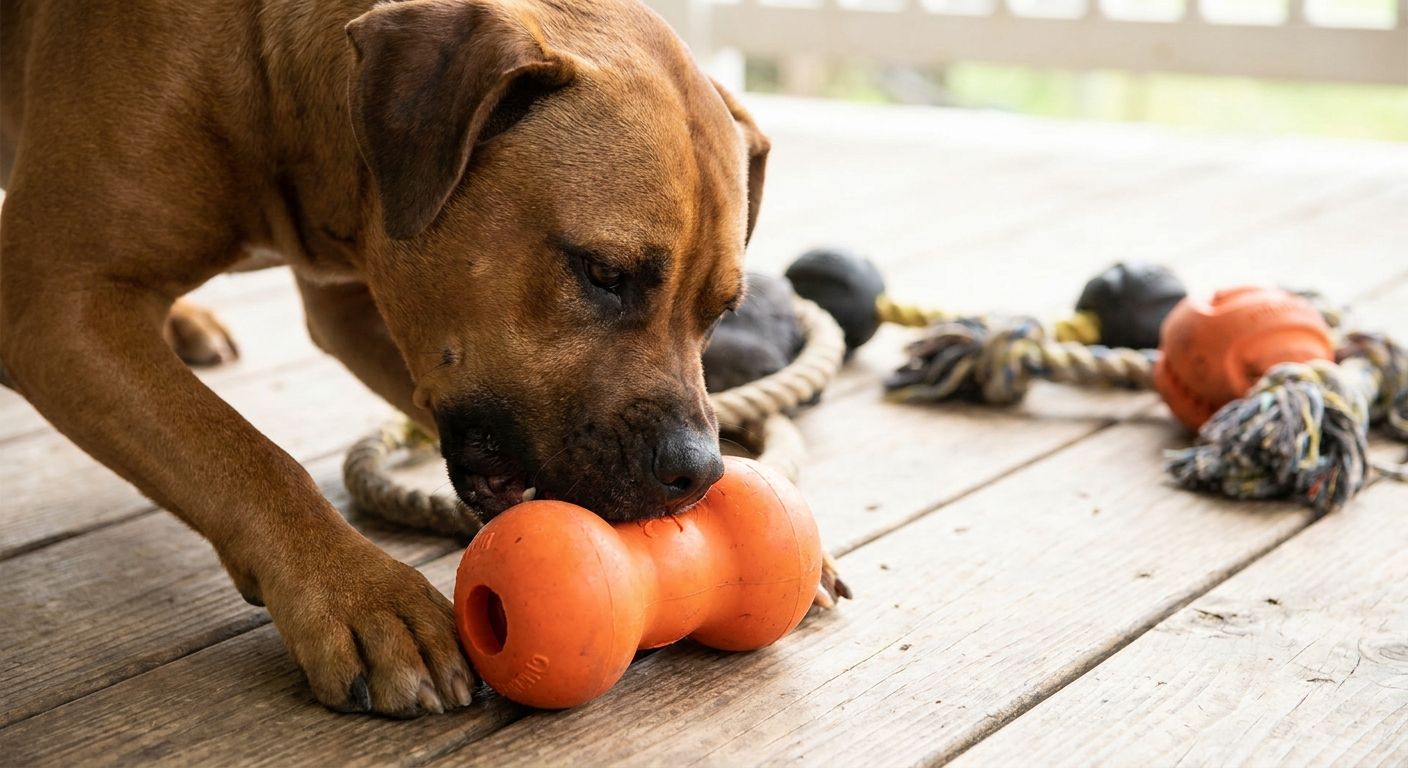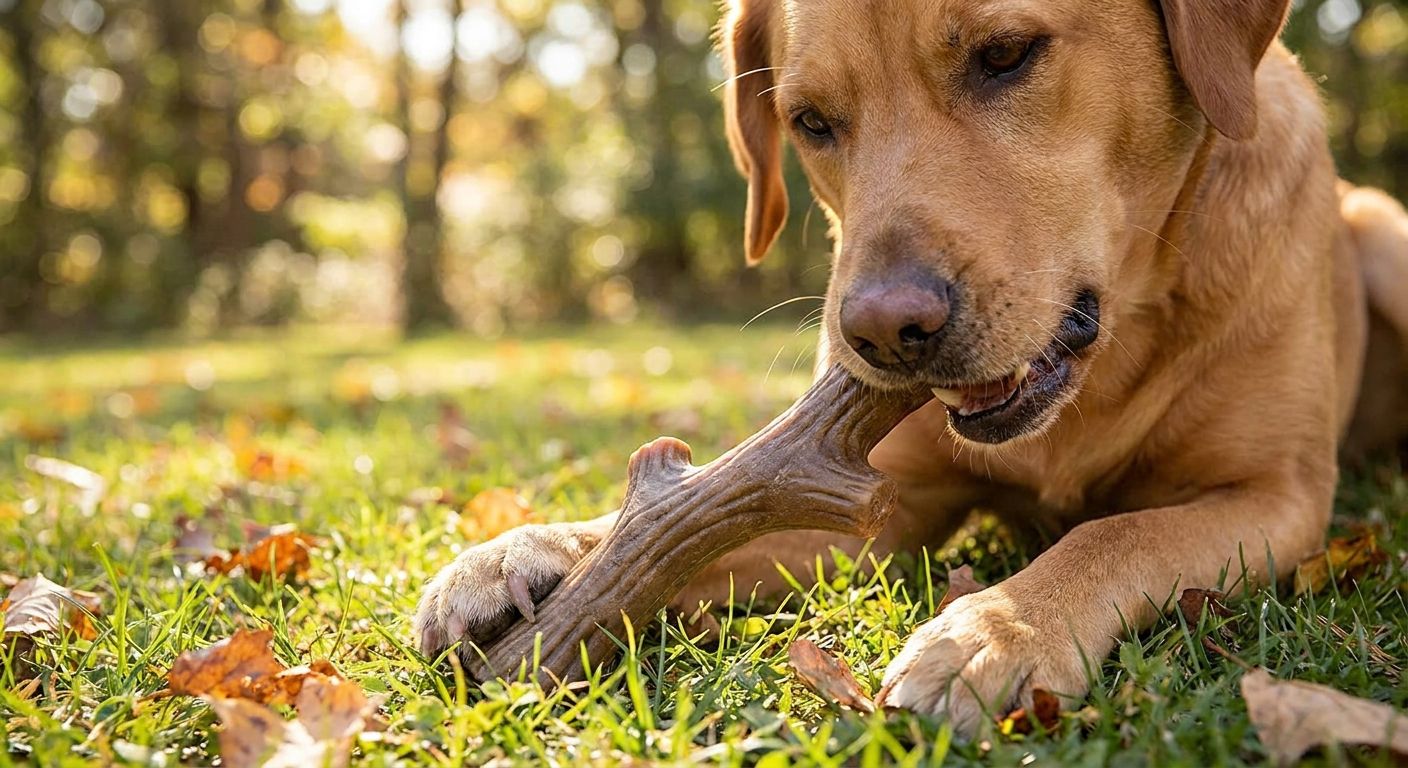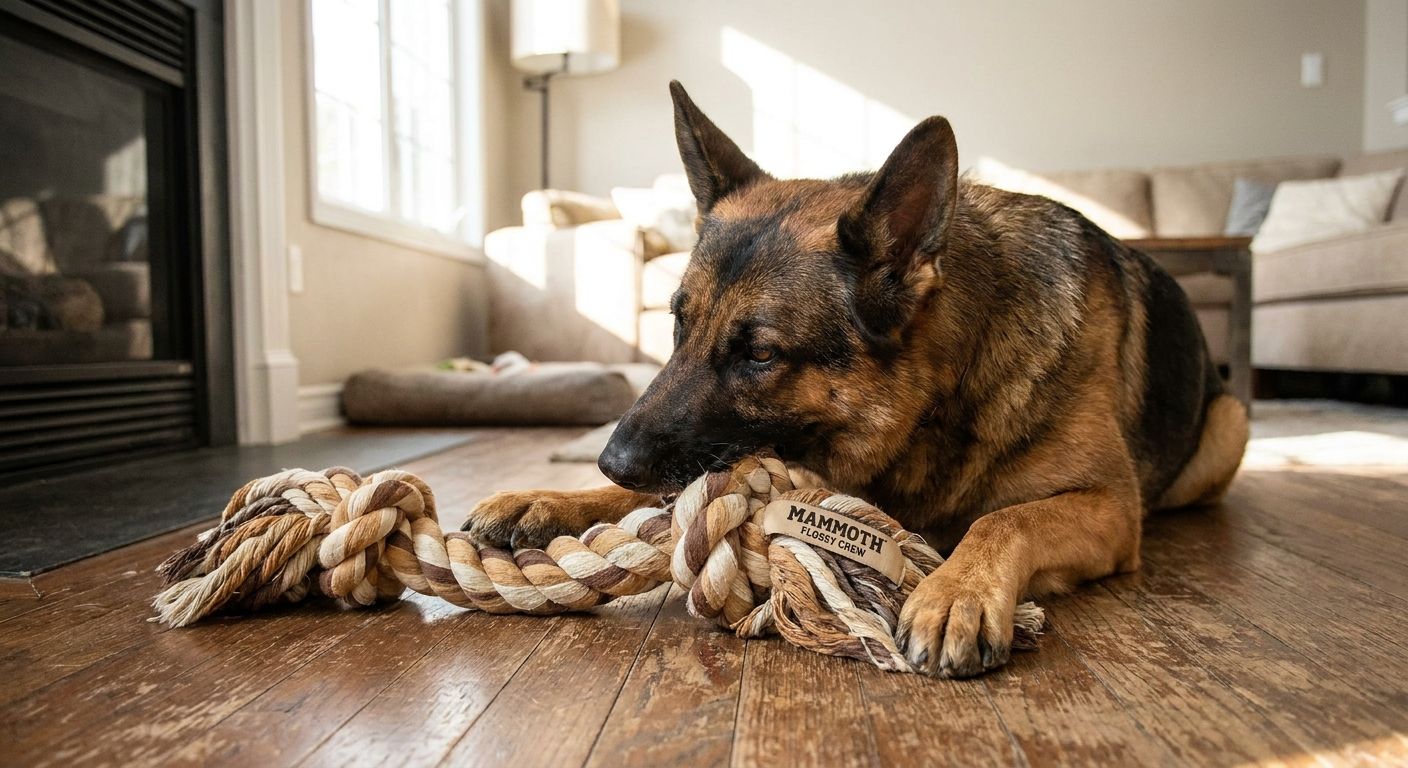
Mammoth Flossy Chews sit in almost every pet store's rope aisle, and if you're raising a pit bull or a certified power chewer, the real question isn't whether your dog will grab one — it's whether it survives past the first ten minutes.
- Mammoth Flossy Chews work as a supervised dental-floss toy for aggressive chewers, not a solo destroyer-proof chew — Consider, not Buy.
- Goughnuts Original Stick is the safer swap for unsupervised power chewing in 2026 — Buy.
- West Paw Tux backs its Zogoflex ring with a manufacturer replacement guarantee — Buy.
- Tuffy's Ultimate Ring fits moderate-to-heavy chewers better than true destroyers — Consider.
Why this matters
Cotton rope toys are built to satisfy a chewing urge and scrape plaque off teeth as the strands rub across gums. That's a legitimate job, and it's the reason rope chews like Mammoth Flossy Chews stay popular year after year.
The problem shows up specifically with aggressive chewers. A dog that shreds a rope in one sitting can swallow long cotton strands, and that's a gut obstruction risk vets see regularly in power-chewer breeds. Pit bull owners already managing allergy and skin issues have an extra reason to care what's dyed into that rope, too — bleached or bright-colored cotton can irritate a dog already prone to sensitivities.
This guide breaks down when Mammoth Flossy Chews for aggressive chewers actually make sense, what to check for before buying, and which alternatives from the rope toys for aggressive chewers roundup hold up better without a leash in hand.
Who this is for
This is written for pit bull, mastiff, and mixed power-chewer owners who like the idea of a rope toy for tug and dental cleaning but have already lost a few toys to a dog that treats "indestructible" as a challenge. If your dog has never destroyed a toy in under an hour, a lot of this still applies, but the stakes are lower.
What to look for in Mammoth Flossy Chews for aggressive chewers
Braid tightness
A loosely braided rope unravels fast under a power chewer's jaw pressure, and a rope that starts fraying in the first session isn't doing its dental job — it's just becoming string. Tighter, denser braids resist the first few bites longer, which buys you supervision time.
Knot construction at the ends
The knots on either end are usually the first failure point. If a knot pulls loose easily, that's the piece most likely to end up swallowed whole rather than chewed down gradually.
Size matched to jaw strength
A rope sized for a 25-pound terrier disappears fast in a 60-pound pit bull's mouth. Buying up a size doesn't make the toy power-chewer proof, but it does slow down how quickly your dog gets through the material.
Dye and treatment on the cotton
Bright dyes and bleaching agents on cheap rope toys can trigger reactions in dogs already dealing with skin or food sensitivities. Plain, undyed cotton is the safer default for any pit bull with a known allergy history.
Supervision requirement
Rope toys are a supervised-play category, not a crate-and-leave category, for aggressive chewers. If you can't watch the session, a rope toy isn't the toy for that window of time.
Replacement signal
Fraying strands, exposed knot cores, and any piece longer than an inch coming loose all mean it's time to retire the toy — not extend its life with another round of chewing.
Top picks for pairing with or replacing Mammoth Flossy Chews
Mammoth Flossy Chews — the honest floss pick. These do exactly what a cotton rope toy is supposed to do: tug play, jaw engagement, light dental scraping. For a true aggressive chewer working alone, that job description runs out fast once the braid starts loosening. Verdict: Consider — good for supervised tug and teeth cleaning, not a stand-in for a solo chew toy.
Goughnuts Original Stick — the rubber backup. This one is rubber, not rope, and it's built with an inner core layer that changes color as an exposed warning sign when the outer layer wears through. That built-in wear indicator is the reason it earns a spot next to a rope toy rather than instead of one for pit bull households. Verdict: Buy.
West Paw Tux — the indestructible ring. Made from West Paw's Zogoflex material, the Tux is backed by the manufacturer's own replacement policy if a dog actually destroys it — a guarantee most rope toys can't touch. It's a chew, not a tug toy, so it fills a different gap than Mammoth Flossy Chews rather than replacing the tug function outright. Verdict: Buy.
Tuffy's Ultimate Ring — the tug specialist. Tuffy's own toughness scale runs from 1 to 10 across its lineup, and the ring shape gives two hands (or one hand and a determined dog) something to pull against without unraveling the way cotton does. It leans more toward moderate-to-heavy chewers than the very top of the aggressive-chewer bracket. Verdict: Consider.


What to avoid
- Bright-dyed or bleached rope toys — they look cheerful on the shelf but bring unnecessary chemical exposure to a dog with any skin or allergy history.
- Unbranded dollar-store rope toys — no consistent braid quality and no way to gauge how many bites before the strands separate.
- Leaving any rope toy in a crate unsupervised with a known power chewer — this is the single most common way a rope toy turns into an emergency vet visit rather than a chew session.
Verdict comparison
| Toy | Material | Best use | Supervision needed | Verdict |
|---|---|---|---|---|
| Mammoth Flossy Chews | Cotton rope | Tug, dental scrape | Always | Consider |
| Goughnuts Original Stick | Rubber | Solo aggressive chewing | Occasional check-in | Buy |
| West Paw Tux | Zogoflex | Solo chewing, fetch | Occasional check-in | Buy |
| Tuffy's Ultimate Ring | Reinforced fabric | Tug, moderate chewing | Always | Consider |
For a broader lineup of rubber and reinforced options tested against real jaw pressure, the Blue-tested power chewer rankings cover more ground than any single rope toy can.
FAQ
Are Mammoth Flossy Chews safe for aggressive chewers?
Mammoth Flossy Chews are safe for aggressive chewers only under direct supervision. Left alone with a power chewer, the cotton rope can unravel and get swallowed, which is a real obstruction risk in 2026 as it has been for years.
What's better than Mammoth Flossy Chews for a pit bull?
For solo, unsupervised chewing, Goughnuts Original Stick and West Paw Tux both hold up better than a cotton rope. Keep the rope toy for supervised tug sessions instead of retiring it entirely.
How long do rope toys last with a power chewer?
It varies by dog, but most aggressive chewers start fraying the braid within a single session rather than across weeks. Check the ends and middle for loose strands every time you pull it out.
Do rope toys actually clean a dog's teeth?
Yes, the fiber action from chewing and tugging on cotton rope does scrape some plaque off teeth. It's a supplement to dental care, not a replacement for brushing or vet cleanings.
Is Goughnuts Original Stick better than Mammoth Flossy Chews?
For unsupervised durability, yes — the rubber construction and built-in wear indicator make Goughnuts the safer pick for a dog left alone with the toy. For tug play and dental scraping, the rope toy still has a role.
What size Mammoth Flossy Chews should I buy for a pit bull?
Size up from what the packaging recommends for a dog's weight class. A larger rope gives a power chewer more material to work through before the toy reaches the failure point.
Should I supervise every rope toy session?
Yes, for any dog with a history of aggressive chewing. Rope toys belong in the same category as rawhide — great for engaged play time, not a set-it-and-leave-it option.
Does West Paw guarantee the Tux if my dog destroys it?
West Paw backs its Zogoflex line, including the Tux, with a manufacturer replacement policy if a dog chews through it. Check the current terms on West Paw's site before buying, since policies can change.
One last thing
The detail most owners miss: a rope toy's failure point usually isn't the middle of the braid, it's the knot. Check the knots on a Mammoth Flossy Chew before every session, not just the strands, because that's where a determined pit bull finds the weak link first.